
بايلول
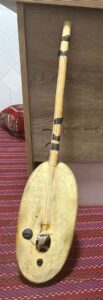
آلة بايلول الموسيقية
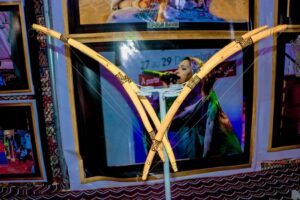
بايلول أو “القوس الفموي”، هي آلة وترية واحدة الأصل الأفريقي، تستخدم بشكل خاص من قبل رعاة الفولان في جنوب موريتانيا.
يعود تاريخ هذه الآلة إلى العصر الحجري ما يجعلها واحدة من أقدم الآلات الموسيقية في العالم، وهي مشتقة من القوس، الذي كان يستخدم تقليديا كسلاح حربي.
والفرق بين الاثنين لا يكمن في مظهرهما، بل في هيكلهما ووظيفتهما.
قد تكون واحدة من أقدم الآلات الموسيقية.
لتشغيل هذه الآلة، يضع الموسيقي أحد طرفي الوتر بين شفتيه، ويلمسه أو يضربه بفرع رفيع.
يعمل الفم كصندوق صوتي من خلال تغيير شكل التجويف الفموي وفتح الشفتين قليلا،. لاتزال هذه الآلة تستخدم حتى اليوم في موريتانيا، خاصة بين مجتمعات رعاة الفولان.

INSTRUMENT BAYLOL
L’instrument connu sous le nom de baylol, arc à bouche ou arc buccal, est un instrument monocorde d’origine africaine et particulièrement utilisé par les Peuls-bergers dans le sud de la Mauritanie. Des vestiges datant de l’âge de pierre en font l’un des instruments les plus anciens au monde. Il est dérivé de l’arc, traditionnellement utilisé comme arme de guerre. La distinction entre les deux réside non pas dans leur apparence, mais dans leur structure et leur fonction : l’arc musical, n’ayant pas besoin de tirer des flèches, ne nécessite pas une flexibilité supérieure à sa tension normale. Il pourrait bien être l’un des premiers instruments de musique.
Pour jouer de cet instrument, le musicien place une extrémité de la corde entre ses lèvres, qu’il pince ou frappe avec une fine branche. La bouche sert alors de caisse de résonance. En modifiant la forme de la cavité buccale et en ouvrant légèrement les lèvres, il est possible de produire des harmoniques. Cet instrument est encore utilisé aujourd’hui en Mauritanie, notamment au sein des communautés peul-bergères.
INSTRUMENT BAYLOL
The instrument known as the baylol, mouth bow, or mouthbow, is a single-stringed instrument of African origin, particularly used by the Fulani herders in southern Mauritania. Remains dating back to the Stone Age make it one of the oldest instruments in the world. It is derived from the bow, traditionally used as a weapon of war. The distinction between the two lies not in their appearance, but in their structure and function: the musical bow, not needing to fire arrows, does not require flexibility beyond its normal tension. It may well be one of the earliest musical instruments.
To play this instrument, the musician places one end of the string between their lips, which they pinch or strike with a thin branch. The mouth then serves as a sound box. By altering the shape of the oral cavity and slightly opening the lips, it is possible to produce harmonics. This instrument is still used today in Mauritania, particularly among Fulani herder communities.